What Makes a VI Peel Different From Other Chemical Peels
Not all chemical peels are the same — and the differences actually matter for your results and your downtime. An honest look at how the VI Peel works and what sets it apart from the peels you may have heard about before.
Who this is for
- You've heard "chemical peel" and aren't sure what actually separates one from another.
- You've had a peel before that was harsher than you expected.
- You have a medium-to-deep skin tone and have been told peels are risky for you.
- You're deciding whether a VI Peel is worth the downtime.
Key takeaways
- Every peel sheds outer layers of skin; the real differences are ingredients, depth, and how the formula is balanced.
- The VI Peel is a blend of medical-grade acids rather than one acid at a high concentration.
- The Precision + Peptides formula adds hexylresorcinol, kojic acid, a gentle retinoid, and two peptides for pigment work.
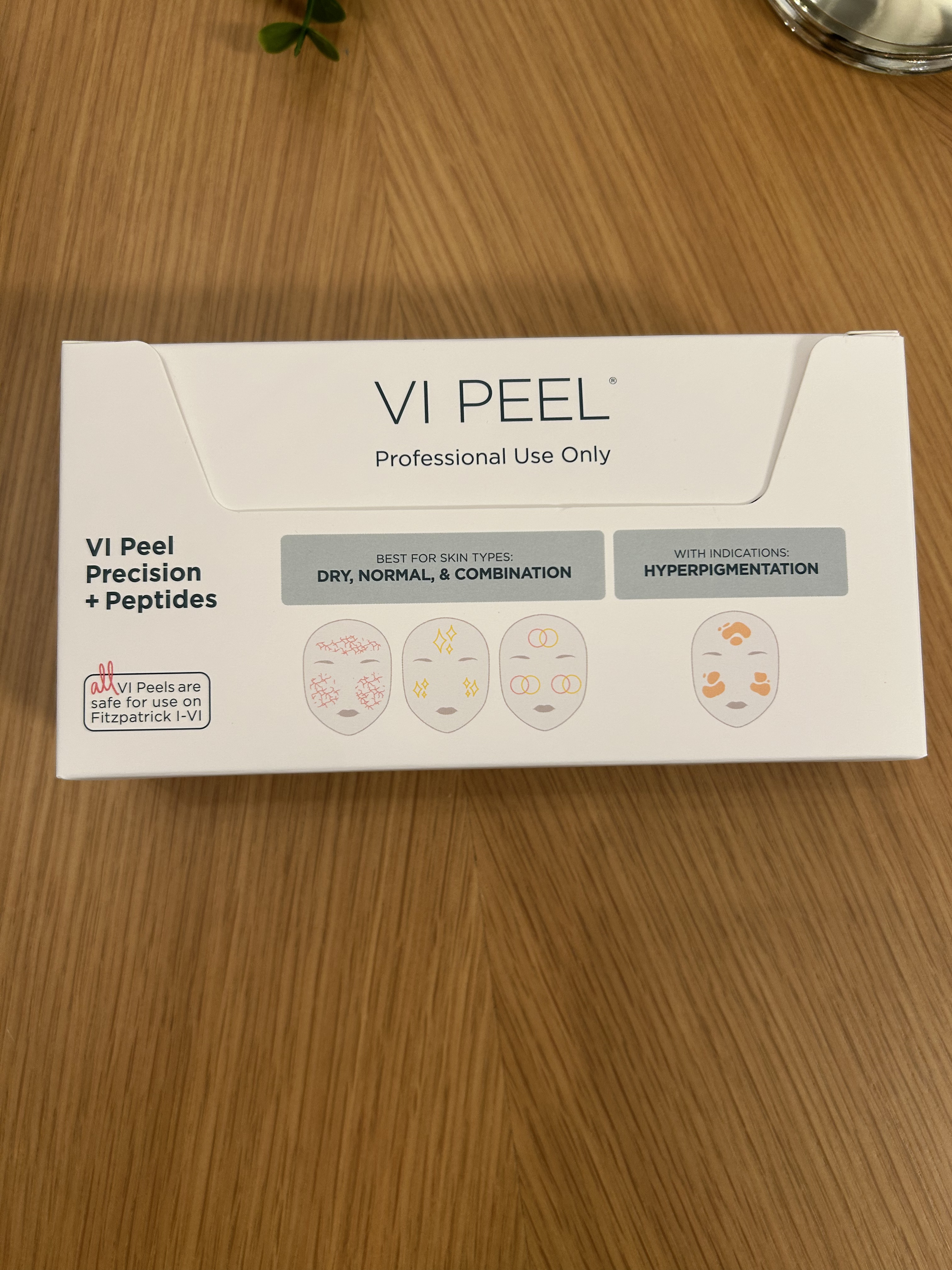
- It's formulated to be safe across all Fitzpatrick skin types, which isn't true of every peel.
- Strong for pigmentation, sun damage, melasma, tone, and texture; not the tool for deep acne scarring or broken capillaries.
- Application takes about fifteen minutes and peeling typically starts around day three.
"Chemical peel" covers a wide range, and that's part of what makes the category confusing. A weekend spa treatment and a clinical resurfacing peel both technically qualify, and they couldn't be more different in what they do, how they feel, or how your skin behaves afterward. So when someone asks me about VI Peel specifically, what they usually want to know is: how is this peel different from the ones I've heard about before, and is it actually worth it?
Here's the honest answer.
What every chemical peel is doing
At the most basic level, every chemical peel applies a solution that prompts your skin to shed its outer layers. As that older skin sheds, what's underneath comes through — typically smoother, more even in tone, and with less of the pigment, dullness, or texture that bothered you. That's the whole concept, and it's been part of skincare for a long time.
The differences between peels come down to which ingredients are in the solution, how deeply they work, and how skillfully they're balanced. That last part matters more than most people realize.
What's actually in a VI Peel
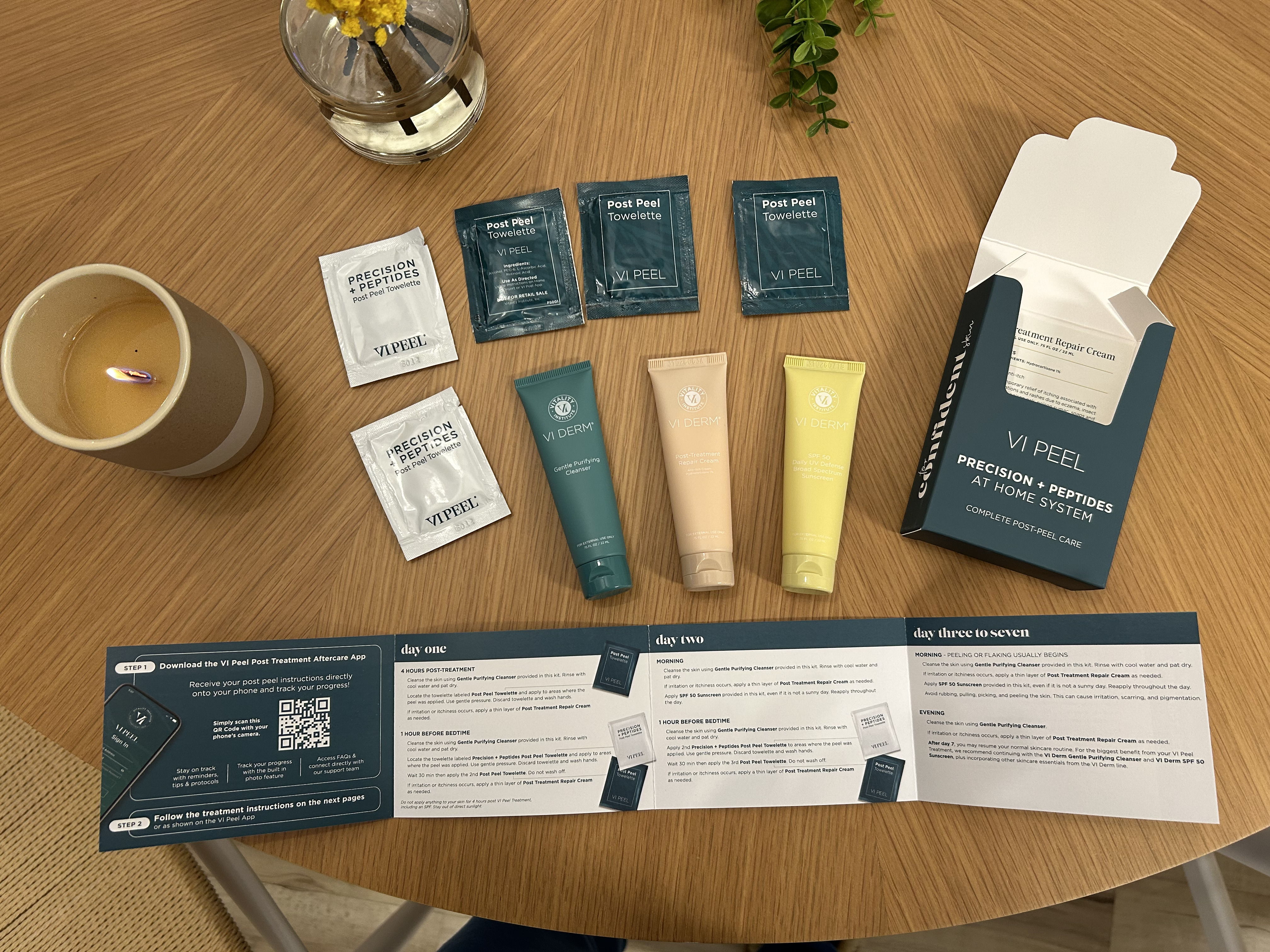
A VI Peel is a synergistic blend of medical-grade acids and active ingredients — trichloroacetic acid, salicylic acid, retinoic acid, phenol, and vitamin C among them — formulated to work together rather than one at a time. The Precision + Peptides formula I use for pigmentation builds on that base with hexylresorcinol, kojic acid, a gentle retinoid called hydroxypinacolone retinoate, and two peptides that help regulate melanin and calm inflammation. The blend matters because it lets the peel address multiple concerns at once (pigment, texture, clarity) without pushing any single ingredient to a depth that would require serious downtime or risk.
That's the engineering that makes it different. Many simpler peels rely heavily on one acid at a higher concentration, which can mean more aggressive results but also more recovery, more redness, and a narrower margin for skin tones that don't tolerate aggressive treatment well. VI Peel was designed to do meaningful work without that trade-off.
Safe across skin tones, which isn't true of every peel
This is the difference I think is most under-discussed. A lot of older or simpler peel formulations carry real risk for medium-to-deep skin tones, particularly the risk of post-inflammatory hyperpigmentation — where treatment meant to reduce pigment actually triggers more. It's part of why melasma, ironically, has been hard to treat with peels for years.
VI Peel was built specifically to be safe across all Fitzpatrick skin types, which is meaningful. It means I can offer it to clients I wouldn't comfortably offer some other peels to, and I can use it on conditions like melasma that other treatments can make worse.
A predictable experience instead of a guess
One of the practical advantages of working with a well-formulated peel is consistency. I know what to expect in terms of how it feels during application, when the peeling will start (usually around day three), how long it lasts, and what your skin will look like when it's finished. That predictability is valuable when you're planning around an event, a trip, or just your own comfort.
The application takes about fifteen minutes with a single towelette, which is part of why so many of my clients pair it with a Botox or filler visit. The recovery is manageable, not dramatic, and you walk out knowing what's coming.
What it does well, and what it doesn't
I want to be straight about this. VI Peel does excellent work on pigmentation, sun damage, melasma, uneven tone, rough texture, and the dark marks acne can leave behind. It's a strong tool for the things it's built for.
It's not a fix for deeper acne scarring (microneedling is the more direct tool there), and it isn't going to address broken capillaries or significant redness (that's more often a laser conversation). If those are what you're dealing with, I'll tell you honestly rather than recommend a peel that won't serve you. Here's how a chemical peel compares with microneedling and laser.
The "different" part isn't marketing — it's what the formula was built for
VI Peel earns its reputation not because it's the strongest peel available, but because it's a thoughtful one. It delivers real results across a wide range of skin tones and concerns, with downtime and risk that stay within reasonable bounds. That's a meaningful combination, and it's why I chose to offer it.
If you're considering one
If you've been curious about a VI Peel in East Cobb, Marietta, or Roswell, the easiest first step is a conversation. I offer free 15-minute video consultations for new clients, where we can look at your skin together and decide honestly whether this peel is the right tool for what you're hoping to change. If you're not sure you're a good candidate, read who a VI Peel is right for.
My 2-minute new client quiz is another easy first step, and it earns you a $75 credit toward your first treatment.
.png)