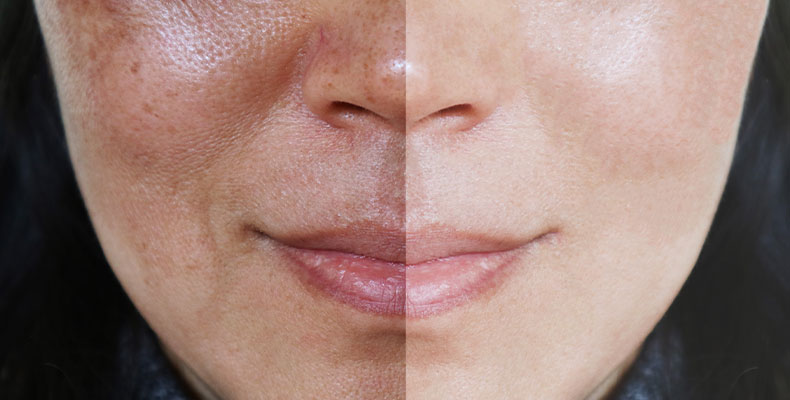
Treating Hyperpigmentation With a VI Peel: What the Journey Actually Looks Like
Pigmentation is one of the most common skin concerns I treat, and it's also one of the most misunderstood. Here's an honest look at what to expect when you set out to treat sun damage, melasma, or acne marks with a VI Peel — across one treatment and across a series.
Of all the skin concerns I see in my practice, hyperpigmentation is the one with the biggest gap between expectation and reality. People come in hoping a single treatment will erase what years of sun, hormones, or breakouts left behind. Sometimes that happens, and it's wonderful when it does. More often, treating pigmentation well is a process — one with real, visible progress, but a process nonetheless.
I want to be straight with you about what that process actually looks like, because the honest version is more useful than the marketing one.
Pigmentation isn't one thing
Before talking about treatment, it helps to know what we're actually addressing. The word "hyperpigmentation" gets used as a catch-all, but it covers a few different conditions, and they respond differently to a peel.
Sun damage and age spots are the most straightforward category. Years of UV exposure cause melanin to overproduce in patches — the spots you may have started noticing in your forties or fifties, or earlier if you grew up somewhere sunny. These tend to respond well to peels, sometimes dramatically.
Melasma is the more complicated one. It's a hormonally driven pigmentation pattern, often triggered or worsened by pregnancy, birth control, or sun exposure. It's frustrating because it tends to come back, and it can actually worsen with the wrong treatments. The VI Peel was specifically designed to be safe and effective for melasma, which is part of why I chose to offer this peel rather than other formulations.
Post-inflammatory hyperpigmentation — the dark marks left behind by old acne, ingrown hairs, or skin trauma — is its own category. These usually fade reasonably well with a peel, though deeper marks may take more than one.
When you come in for a consultation, part of what I'm doing is figuring out which of these categories you're in, because it shapes what we should expect from treatment.
What one peel can do
After a single VI Peel, most people see meaningful improvement once the peeling is complete — usually around a week to ten days post-treatment. Your skin looks brighter, more even, and the surface layer of pigment is lifted. For someone dealing with mild sun damage or recent acne marks, one peel can sometimes be enough to feel really good about where you've landed.
But — and this is the honest part — one peel rarely takes someone with significant pigmentation all the way to clear skin. What it does is shift you in the right direction, sometimes by a lot.
What a series can do
For deeper or more established pigmentation, particularly melasma and longstanding sun damage, a series of peels is usually what gets you to the result you're hoping for. Most people benefit from three to four peels over the course of a year, depending on how their skin responds and how stubborn the pigmentation is. There's no fixed schedule. I'll time them around how your skin is responding and what's coming up on your calendar.
Each peel builds on the last. The first one lifts the most accessible layer of pigment. The second reaches what was underneath. By the third or fourth, many people are seeing the kind of transformation they'd hoped one peel would deliver — and they're glad they stayed with the process rather than giving up after the first.
I'll always tell you honestly what I think your skin needs, including when I think one or two peels will be enough rather than a longer series. I don't sell packages I don't think you need.
What progress actually looks like
A few things worth knowing about the experience itself.
Progress isn't always linear. Sometimes the second peel feels more dramatic than the first. Sometimes you'll notice the most improvement in the weeks between peels rather than right after one. Skin works on its own timeline, and patience is part of the process.
Melasma can come back. This is the part I want to be most honest about. Even when we treat melasma successfully, it can return — especially with sun exposure, hormonal shifts, or pregnancy. That doesn't mean treatment failed. It means melasma is a condition you manage rather than cure, and we plan around that with realistic maintenance.
Sun protection is the difference-maker. I cannot say this strongly enough. The single biggest factor in whether your pigmentation results last is whether you protect your skin from UV exposure between and after your treatments. Daily sunscreen, hats, shade — these protect the investment you just made.
You'll notice secondary benefits too. People who come in for pigmentation often discover that their texture, clarity, and overall radiance improve as well. The peel is doing more than addressing one concern.
Who progresses fastest, and who needs patience
I'll share a few patterns I've noticed.
People with clear, recent sun damage — the kind of spots that showed up in the last few years — tend to respond fastest. One or two peels often makes a meaningful dent.
People with post-acne marks generally do well with two to three peels, depending on depth.
People with longstanding melasma are the ones I prepare most carefully for the process. Real, visible improvement is possible — I see it regularly — but it usually takes a committed series and ongoing sun protection to maintain. If you're in this category, I'd rather have an honest conversation about timelines than promise you something faster than I can deliver.
A note about skin tone
This matters enough to repeat from my other posts. Some older or simpler chemical peels carry real risk for medium-to-deep skin tones, and can actually trigger more pigmentation rather than less. The VI Peel was specifically formulated to be safe across all Fitzpatrick skin types, which is part of why I chose to offer it. If you've been hesitant about peels because of past experiences with another treatment or concerns about how your skin will respond, that's worth a conversation.
Pigmentation questions I hear most
How many peels does it take to fade dark spots?
Recent, mild sun damage often improves noticeably after one or two. Deeper or longstanding pigmentation usually takes three to four peels over the course of a year. I'll give you an honest read at your consultation rather than a standard package.
Can a VI Peel treat melasma?
Yes, and it's one of the reasons I chose this peel. Melasma responds poorly to harsher treatments, which can worsen it. The VI Peel was formulated with melasma in mind.
Will my hyperpigmentation come back?
Sun damage and post-acne marks generally stay improved with good sun protection. Melasma is different — it's hormonally driven and can return with sun exposure or hormonal changes, so it's something we manage over time rather than cure.
How soon will I see pigment start to fade?
Once the peeling finishes, usually around a week to ten days after treatment. You'll see the clearest picture of what one peel accomplished at about the two-week mark.
Is a VI Peel safe for melanin-rich skin?
Yes. The formulations I carry are designed to be safe across all Fitzpatrick skin types, which matters because some older peels carry a real risk of triggering more pigmentation on deeper skin tones.
What's the single biggest factor in keeping results?
Daily sun protection. Nothing else comes close. UV exposure between treatments undoes the work faster than anything else I see.
If you're considering treatment
If pigmentation is what's bothering you and you're thinking about a peel in East Cobb, Marietta, or Roswell, my 2-minute new client quiz is an easy first step — and it earns you a $75 credit toward your first treatment.
I offer free 15-minute video consultations for new clients, where we can look at your skin together, figure out which kind of pigmentation we're working with, and talk honestly about what a realistic plan would look like for you — whether that's one peel, a series, or sometimes neither.
.png)
.png)